Showing posts with label GCSE Revision. Show all posts
Showing posts with label GCSE Revision. Show all posts
Tuesday, May 15, 2007
GCSE Revision Case Studies
This worksheet is really to be used as a guide for 3H, which doesn't require a great deal of case studies, but rather located examples which add value to most written responses. By clicking on the tool bar above you can increase the size and print it.The tool bar below changes the type of document.

Friday, May 11, 2007
Physical Environment revision

This is a great effort by Val with her Higher Geog Blog which I'm definitely going to investigate making when I find the time. It's an interactive crossword that will test your knowledge of key vocabulary in the exams. Just click on the crossword and this will take you to a file sharing site where you download and open or save the interactive crossword. I enjoyed doing this alot!
I've now had a go and you can download mine here in the same file share site. Enjoy!
Monday, April 30, 2007
Interpreting Questions

It's one thing preparing well for exams and knowing your stuff but unless you interpret the question right and make the correct links in your responses you will fall short of the top marks available. Thanks to NIck who has grouped his own worksheet on exam command words with Daniel Raven Ellison's video clip. Both can be seen on Nick's Brauntan Geography Blog
Thursday, April 5, 2007
Managing Cities - London Docklands
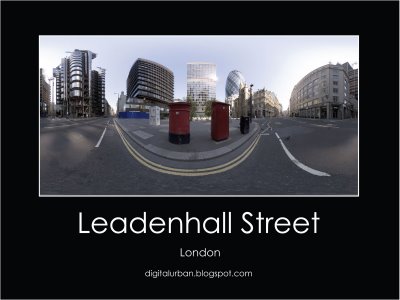
Extend your MEDC magaging cities knowledge with this account of London Docklands:
Londland Doklands to get its own Twin Towers
Check out the stunning panaramic of Leadenhall Street in the Docklands
Tomb with a View

As part of your work on Managing settlements we've used Cairo as our case study for LEDC cities. You need to develop your specific knowledge of Cairo. Cities evolve all the time and with it the management strategies of the government. Read This BBC article on new attempts to manage squater settlements in Cairo in more sustainable ways.
Bitesize Revision Podcasts
A range of Geography revison “audiobite” podcasts can be found at Bitesize Podcasts
Also try these websites for extra revision, quizes and testing your knowledge:
S-Cool
Bitesize Geography
internetgeographer
Check out the other Blog sites in the links section
Also try these websites for extra revision, quizes and testing your knowledge:
S-Cool
Bitesize Geography
internetgeographer
Check out the other Blog sites in the links section
Wednesday, April 4, 2007
Noel Jenkin's advise on Level marking at GCSE
In the GCSE exam, answers worth more than 4 marks will be marked using a level of response. You are not awarded a mark for every correct point you make. In general it works like this:
Level 1: Basic (1 or 2 marks)
Knowledge of basic information
Simple understanding
No links between statements
Little or no detail
Few specialist terms
Level 2: Clear (3 or 4 marks)
Knowledge of accurate information
Clear understanding
Links between statements
Some named examples
Use of specialist terms
Level 3 (5 or 6 marks)
Usually found at the end of a question, a level 3 answer requires in depth knowledge and understanding, very clear links between statements, and detailed case study examples.
Here is an actual example of levelled marking from the Year 10 end of topic test that I’ve just marked.
Question: Describe the main features of the outer suburbs of a settlement (4 marks) (AQA A 2005 Higher)
Student A wrote:
There are lots of green space, modern housing, curved roads and very quiet.
This answer gets L1 basic. (2 marks) Simple knowledge is shown, but there are no links between statements.
Student B wrote:
Outer suburbs generally house upper class residents. Houses are more likely to be detached and there would be more fields. The motorway or large road heading to the CBD would be present. Also there may be airports or big shopping malls that are easy to get to.
This answer gets L2 clear (4 marks) as the student makes two linked statements .
The final question on the paper was:
Describe how governments of MEDCs try to cope with urban sprawl. (6 marks)
Read the following answer and then submit a comment suggesting the level at which you would mark the answer, and why. Re-read the criteria for level marking first!
Student C wrote:
In MEDCs, in particular Britain, the government has created green belts to stop cities from continuing to grow too far into the countryside. Instead the growing population can be housed in new towns containing spacious housing and many services. Also in older cities, inner city areas can be re-furbished or rebuilt, creating more space for new homewosks, businesses and services, though it is often more expensive.
Subscribe to:
Posts (Atom)

